Humanities Research Software Engineering
Collaboratively developing research software grounded in humanities theories and methods

On this page
The 2026-2027 Call for Proposals is open—deadline: April 17th.
At CDH, we bridge the tradition of the "DH Developer" with the emerging field of Research Software Engineering, which applies rigorous and systematic software engineering methodologies to research. Embedded in the humanities, we collaborate with faculty to develop digital humanities research projects and generate a variety of scholarly outputs, including software packages, datasets, interfaces, and peer-reviewed articles.
Our research projects are true partnerships, requiring both technical and humanistic expertise. Through integrated project design and management support, we work with humanities scholars to translate research questions into actionable plans that take into account the particularities and complexities of humanities research and data.
RSE Team
Rebecca Sutton Koeser
Lead Research Software Engineer
Laure Thompson
Research Software Engineer
Hao Tan
Research Software Engineer
Jeri Wieringa
Assistant Director
Collaborate with us!
Collaborative Research Partnerships
Faculty are welcome to apply to work with the CDH Research Software Engineering team!

Featured collaborations
MuSE (Multilingual Semantic Embeddings)
Linking concepts in music-theoretical texts across languages


Featured software
The CDH RSE Team creates and releases new, open source software as part of their work on our collaborative projects. This list includes some of the software developed since the team’s formation in October 2016.
All software is released under the Apache 2 open-source license. Our primary technical stack includes the Python programming language and Django, a web application framework written in Python. Our software is release on GitHub.
remarx
remarx
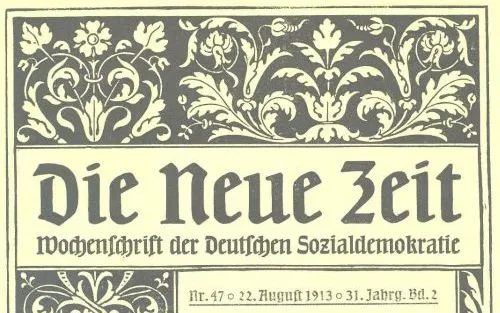
In-progress research software developed for the CDH project Citing Marx. The primary purpose of this software is to identify quotes of Karl Marx's Manifest der Kommunistischen Partei and the first volume of Das Kapital within articles published in Die Neue Zeit between 1891 and 1918.
Initial release: Version v1.0, January 2026.
ppa-django
ppa-django
A new implementation of Princeton Prosody Archive as a Python/Django web application. Intended to provide a reusable solution for creating curated collections of HathiTrust materials, and eventually materials from other sources. Provides a bulk import of HathiTrust materials, collection management, metadata correction, and advanced search capabilities.
Initial public release: version 3.0, December 2018.
Software citation:
Koeser, Rebecca Sutton, Nick Budak, Gissoo Doroudian, Benjamin Hicks, Vineet Bansal, and Kevin McElwee. “Princeton-cdh/ppa-django: V3.7 Hathitrust Excerpt Support and Gale/ecco Import”. Zenodo, 2021. https://doi.org/10.5281/zenodo.5163955.
mep-django
mep-django
Python/Django web application for The Shakespeare and Company Project. Provides management interface and public search and browse for data about library members, account activity, and items that circulated in Sylvia Beach's private lending library.
Version 1.4 released January 2021; initial public launch version 1.0 released May 2020.
Software citation:
Koeser, Rebecca Sutton, Nick Budak, Gissoo Doroudian, Benjamin W. Hicks, Xinyi Li, and Kevin McElwee. (2021, January 22). Princeton-CDH/mep-django: v1.4 (Version 1.4). Zenodo. http://doi.org/10.5281/zenodo.4458099
parasolr
parasolr
Lightweight Python library for Solr indexing, searching and schema management with optional Django integration. Currently being developed in tandem with mep-django, with plans for eventually applying to other projects.
Version 0.9 released April 2024.
viapy
viapy
Python module for interacting with Virtual International Authority File (VIAF) data and APIs, with optional Django integration. Developed for use in multiple projects.
Initial version 0.1 released October 2017; v0.3 released April 2024.
djiffy
djiffy
Python module for use with the Django web framework to index and display IIIF Presentation manifests for digitized content. Developed to integrate Princeton University Library (PUL) digitized content for Derrida’s Margins and The Winthrop Family on the Page.
Initial version 0.1 released June 2017; version 0.9 released August 2024.
Related posts
Making Research Easier to Save: A Guide to Zotero Integration for Academic Websites
11 November 2025
Hao Tan