CDH announces inaugural Affiliate Labs
15 May 2026

The Center for Digital Humanities is excited to announce its Affiliate Labs designation – a formal recognition of our partnerships with Princeton research groups whose work sits at the intersection of humanistic inquiry and digital and computational methods. Affiliation reflects the depth and ongoing nature of these collaborations, and signals CDH’s commitment to fostering a broad and vibrant ecosystem of digital humanities across campus. Affiliate Labs represent a range of approaches — from open-access archival preservation and computational text analysis to the development of language technologies and digital reconstructions of historical places.
“The Affiliate Labs program recognizes what is already happening at Princeton — rigorous, innovative work at the intersection of humanities and computation — and makes space for those partnerships to grow," states Jeri Wieringa (Assistant Director, CDH). "We’re excited to see where these collaborations take us.”
We are proud to introduce the following inaugural Affiliate Labs:
Princeton Geniza Lab, directed by Marina Rustow (Khedouri A. Zilkha Professor of Jewish Civilization in the Near East), is at the forefront of digital humanities scholarship on the Cairo Geniza, preserving and providing access to this vast and invaluable collection of historical texts. CDH has had the privilege of collaborating with the PGL on the Princeton Geniza Project since 2020.
African Language Technologies Lab, co-directed by Christiane Fellbaum (Professor of Linguistics) and Happy Buzaaba (Associate Research Scholar, AI Lab with affiliations in CDH and Africa World Initiative), works to increase the representation of African languages in rapidly advancing language technologies driven by large language models, while foregrounding the values and cultures those languages carry. Through a series of projects, courses, and speaker events, the lab generates campus-wide conversation about this critical and underserved area of language technology research.
REACH² Lab, led by Paul Vierthaler (Assistant Professor of East Asian Studies, Associate Faculty Director of CDH), centers on the digital analysis of the literature, culture, and history of East Asia. Vierthaler and his collaborators work on projects ranging from quantitative analyses of large-scale text and image corpora to digital reconstructions of historical places, welcoming students, faculty, librarians, and researchers interested in any dimension of computational East Asian studies.
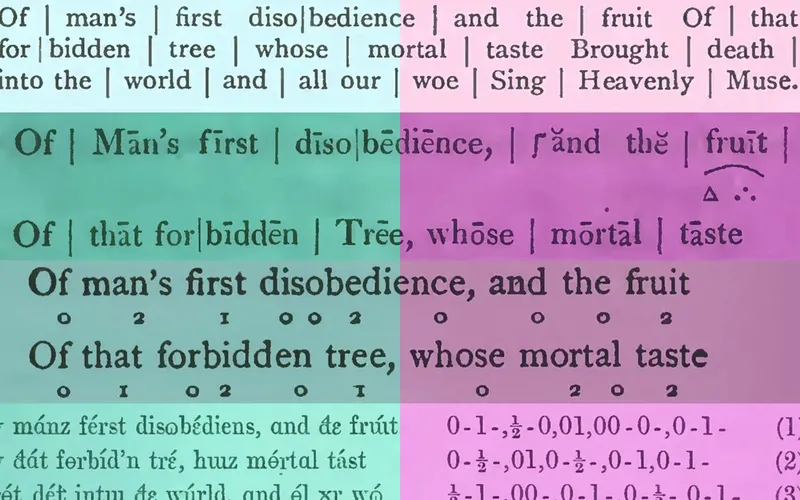
Poetry's Data Lab, directed by Meredith Martin (Professor of English, Faculty Director of CDH), draws on the Princeton Prosody Archive to analyze patterns in anglophone poetry teaching over time, asking what poetry used in teaching texts — at scale — can reveal about canonicity, book history, and the development of English as a discipline. The lab's work is linked to the broader Ends of Prosody project and forthcoming special issues of the Journal of Cultural Analytics and Victorian Poetry.
We look forward to sharing more about each of these labs and the work emerging from these partnerships in the months ahead. To learn more or inquire about affiliation, visit the CDH Affiliate Labs page.
Affiliate Labs
Princeton Geniza Lab
At the forefront of DH scholarship on the Cairo Geniza, preserving and providing access to this vast and invaluable collection of historical texts. Director: Marina Rustow

African Language Technologies Lab
Focused on increasing the representation of African languages in NLP, LLMs, and AI. Directors: Christiane Fellbaum, Happy Buzaaba

REACH² Lab
Centered on digital analysis of the literature, culture, and history of East Asia. Director: Paul Vierthaler

Poetry's Data Lab
Using the poetry found in the Princeton Prosody Archive datasets to analyze patterns of anglophone poetry teaching over time. Director: Meredith Martin