Evaluating AI as a Cultural Technology @ ICML 2026 Workshop
–
Speakers
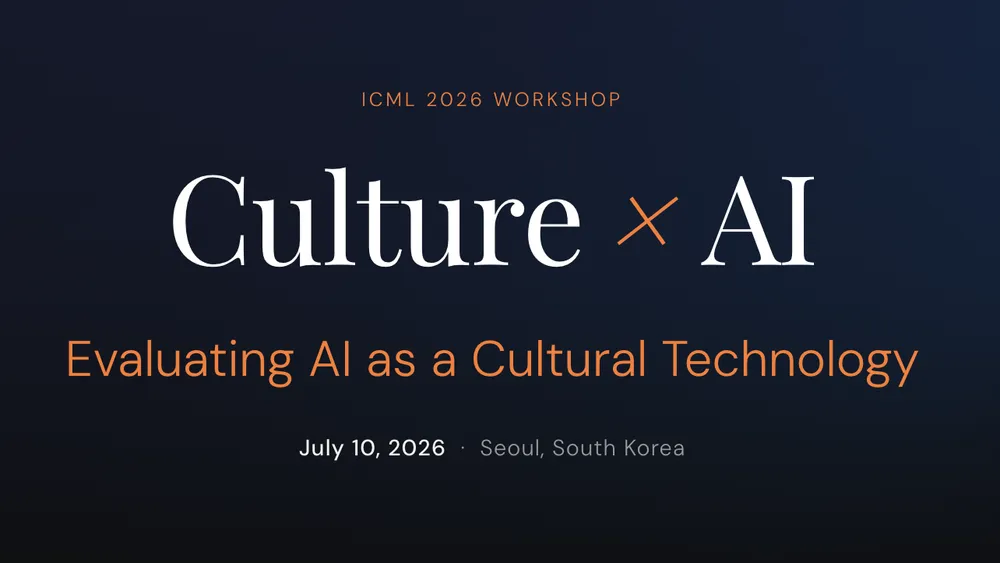
Generative AI is increasingly recognised as a social and cultural technology. These systems process an enormous amount of social data to produce novel cultural artefacts, such as text, images, and videos. While much progress has been made in evaluating cultural aspects of AI, it has tended to focus on harm mitigation: identifying and preventing moral violations, the spread of bias and misinformation, and deviation from human values. But a more positive or constructive notion of culture in AI remains underdeveloped. How can we evaluate cultural aspects of AI technology in a way that not only seeks to avoid failure, but gives a more robust definition of success?